 281-623-1105

Platinum vs. White Gold: Which Metal Is Better for Your Engagement Ring?
When you are shopping for an engagement ring, most of the attention naturally goes to the diamond. But the metal you choose is just as important. It affects your ring’s appearance, durability, maintenance, and how it will look after years of everyday wear.
Two of the most popular choices for a bright, white engagement ring are platinum and white gold. At first glance, they can look very similar, but they have some important differences.
So, when it comes to platinum vs. white gold, which metal is better for your engagement ring? The answer depends on your lifestyle, budget, and personal preferences.
What Is Platinum?
Platinum is a naturally white precious metal known for its durability, density, and luxurious feel. Platinum jewelry is typically made with a high percentage of pure platinum, giving it a substantial weight and naturally white appearance.
One of the biggest advantages of platinum is that its white color is natural. It does not require rhodium plating to achieve the bright appearance commonly associated with white jewelry.
Over time, platinum develops a soft surface finish known as a patina. Some people love this slightly matte, vintage-inspired appearance, while others prefer to have their platinum jewelry professionally polished to restore a brighter finish.
What Is White Gold?
White gold is created by mixing pure gold with other metals to produce a lighter, whiter appearance. Engagement rings are commonly made in 14K or 18K white gold.
Because white gold is not naturally a bright white color, it is typically finished with a thin layer of rhodium plating. This gives the ring the crisp, reflective white appearance many people associate with white gold jewelry.
Over time, rhodium plating can wear away, especially on an engagement ring that is worn every day. When this happens, the ring may begin to show a slightly warmer tone and can be professionally replated to restore its bright white finish.
Platinum vs. White Gold: Appearance
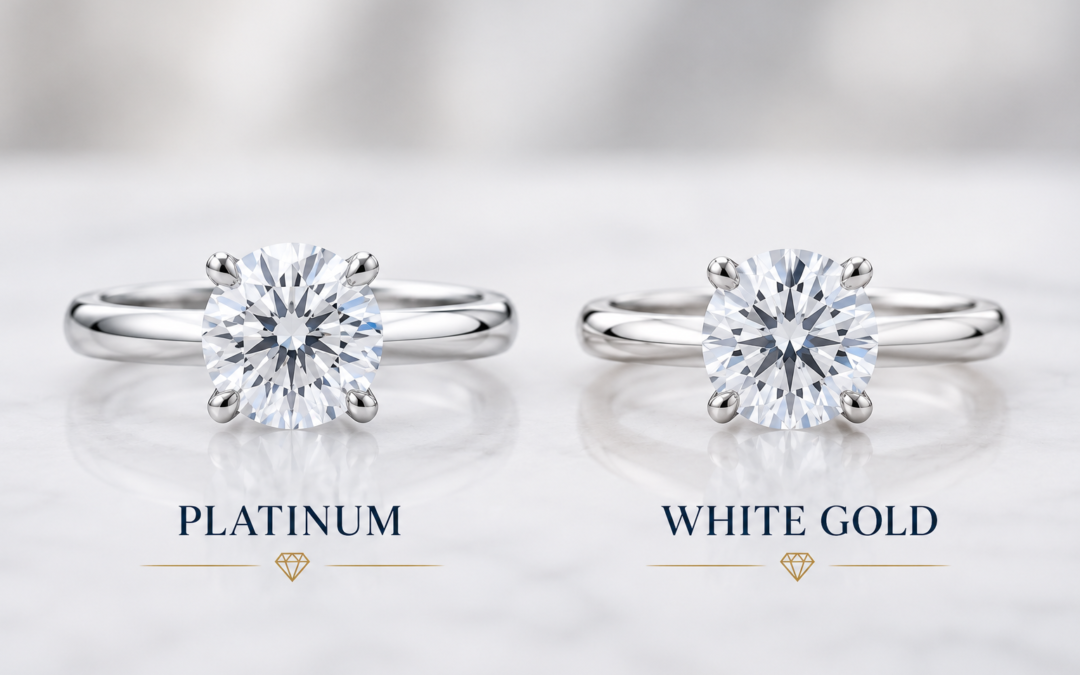
When both metals are new and professionally polished, platinum and rhodium-plated white gold can look remarkably similar.
The biggest difference becomes more noticeable over time.
Platinum maintains its naturally white color but may develop a patina as it is worn.
White gold typically maintains its bright white appearance through rhodium plating, which may need to be renewed periodically depending on how often the ring is worn.
If you love a naturally white metal and don’t mind the character that develops with wear, platinum may be the better choice. If you prefer a highly polished, bright-white finish and don’t mind occasional maintenance, white gold is an excellent option.
Which Metal Is More Durable?
Both platinum and white gold are durable enough for engagement rings, but they wear differently.
Platinum is dense and highly durable. When platinum is scratched, the metal tends to shift or displace rather than simply being lost. This contributes to the patina that develops over time.
White gold is also a strong choice for everyday jewelry, particularly in 14K. Depending on the alloy, white gold can feel harder and more resistant to surface scratching than platinum, although some metal can gradually wear away over many years.
For rings with intricate settings or valuable center stones, the design and quality of craftsmanship are just as important as the metal itself.
Which Is Better for Holding a Diamond?
Platinum has traditionally been a popular choice for prongs and settings because of its density, durability, and resistance to corrosion. This makes it an excellent option for securing diamonds and other precious gemstones.
However, a properly designed and professionally made white gold setting can also securely hold a diamond for many years.
Regardless of which metal you choose, engagement rings should be inspected periodically to ensure the prongs and setting remain secure—especially if the ring is worn every day.
Platinum vs. White Gold: Maintenance
Maintenance is one of the biggest differences between these two metals.
Platinum does not require rhodium plating because it is naturally white. However, it will develop surface scratches and patina with regular wear. If you prefer a polished appearance, your jeweler can professionally refinish the ring.
White gold may require periodic rhodium plating to maintain its bright white color. How frequently this is needed depends on the ring, the wearer’s lifestyle, and how quickly the plating wears.
For someone who wants to avoid periodic replating, platinum may have an advantage.
Which Metal Is More Expensive?
Platinum engagement rings generally cost more than comparable white gold rings. This is partly because platinum jewelry typically contains a higher percentage of pure precious metal and platinum is denser, meaning more metal by weight is often required to create the same ring.
White gold is typically the more budget-friendly option, allowing you to potentially allocate more of your engagement ring budget toward the center diamond or other design details.
However, it’s also worth considering long-term maintenance. White gold may require rhodium replating over the years, while platinum does not.
Platinum vs. White Gold: Quick Comparison
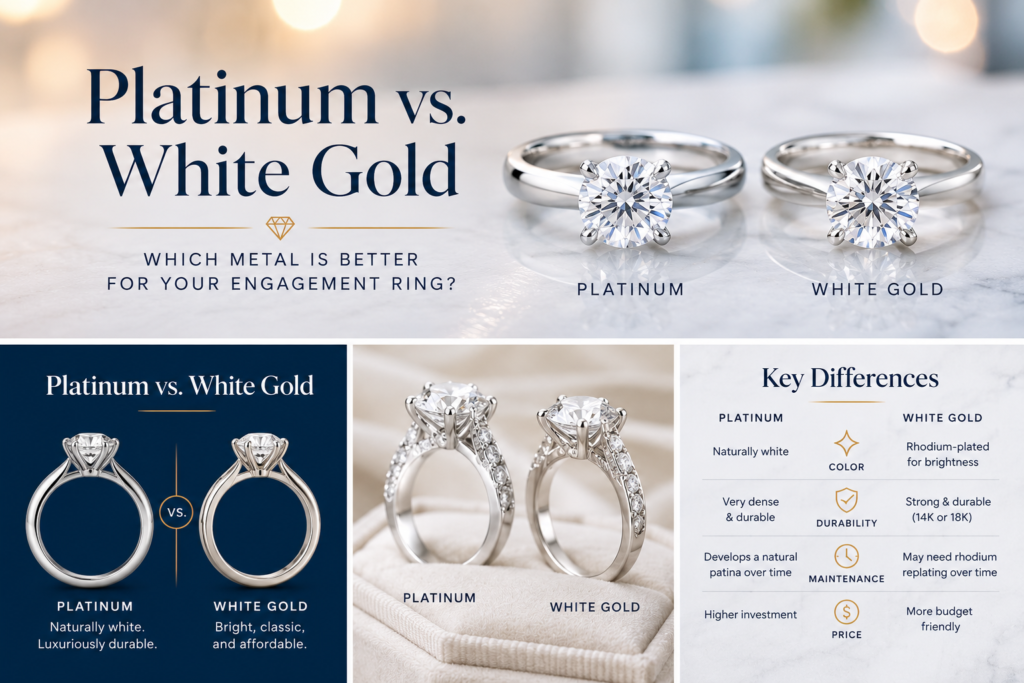
Choose platinum if you:
- Want a naturally white precious metal
- Prefer a heavier, more substantial feel
- Want to avoid rhodium replating
- Appreciate the unique patina platinum develops over time
- Are comfortable with a higher initial price
Choose white gold if you:
- Want a bright, reflective white finish
- Prefer a more affordable precious metal option
- Want a lighter feel on the finger
- Are comfortable with occasional rhodium replating
- Want to dedicate more of your budget to the diamond or other design features
So, Which Metal Is Better for an Engagement Ring?
There isn’t one metal that’s best for everyone.
For someone looking for a naturally white, dense, premium metal that does not require rhodium plating, platinum is an excellent choice. Its durability and distinctive way of aging make it especially appealing for an engagement ring designed to last for generations.
For someone who wants the beautiful appearance of a white metal at a more accessible price, white gold is also an excellent choice. It offers a classic, bright appearance and works beautifully with virtually every diamond shape and engagement ring style.
Ultimately, the best choice depends on your budget, lifestyle, and how you want your engagement ring to look and feel over time.
Find the Perfect Metal for Your Engagement Ring
At Diamond Exchange Houston, we help you compare platinum, white gold, yellow gold, and other precious metals to find the right option for your engagement ring. Whether you’re choosing a classic solitaire or creating a completely custom design, our team can guide you through the process and help you select a metal that complements both your diamond and your lifestyle.
Ready to create your engagement ring? Visit Diamond Exchange Houston to explore diamonds, compare metals, and work with our team to design a ring that’s uniquely yours.